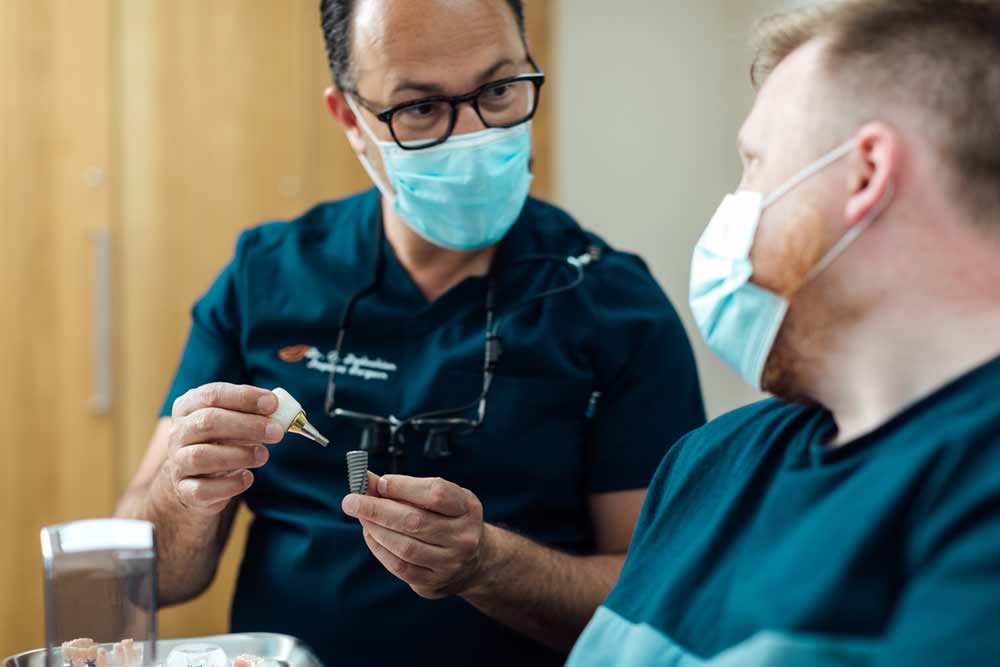
Dental implants are one of the most reliable and satisfying treatments we provide in modern dentistry. When a tooth has been lost, whether through decay, gum disease or injury, replacing it with an implant can restore not only appearance but also comfort and confidence. Our Catford patients can chew properly again, they can smile without hesitation, there is no movement, no soreness from chafing, and no need to remove anything at night.
While dental implants are strong and designed to last for many years, they are not indestructible. Good aftercare is absolutely essential. They cannot decay, but the tissues around it can still become inflamed or infected if they are not looked after properly. Long-term success depends as much on daily care as it does on the surgical procedure itself.
A dental implant is a small screw-like object that is placed into the jawbone. Over time, the bone bonds with the surface of the implant in a process known as osseointegration. This creates a stable foundation for a crown, bridge or denture to be added. The result is a replacement tooth that looks and functions in a very natural way.
Although the implant itself cannot develop tooth decay, it still relies on healthy surrounding gum and bone. If plaque accumulates around the implant and is not removed effectively, the tissues can become inflamed. In more serious cases, bone loss can occur around the implant. This condition is known as peri-implantitis. It is similar in many ways to advanced gum disease around natural teeth which can result in tooth loss.
The encouraging news is that peri-implant problems are largely preventable with good oral hygiene and regular professional care at the Rushey Green Dental Practice in Catford.
Immediately after implant placement, there is a healing phase. During this time, it is important to follow the instructions we provide carefully. There may be some mild swelling or tenderness for a few days. Gentle cleaning around the area is important, but vigorous brushing should be avoided until the tissues have settled.
If stitches have been placed, we will advise you when they will be removed or whether they will dissolve on their own. Smoking can significantly affect healing and increase the risk of implant failure, so stopping smoking during this period is strongly recommended.
Once the implant has integrated and the final crown has been fitted, your focus shifts to long-term maintenance.
Looking after an implant is very similar to looking after a natural tooth, but attention to detail is especially important. You should brush thoroughly twice daily using a soft-bristled toothbrush. Electric toothbrushes are often helpful because they provide consistent movement and can make cleaning more effective. Take your time and pay particular attention to the gum line around the implant crown.
Make sure to clean between the teeth. This is an area where many problems begin. Plaque tends to accumulate between teeth and around the base of the implant crown. Flossing or interdental brushes are usually the best way to do this and we will discuss this with you.
Consistency is the key. There is no complicated routine required, but there must be regular and careful cleaning.
Implants do not usually cause pain in the early stages of a problem. That is why routine check-ups at your Catford dental surgery are so important. Nevertheless, there are signs that you should not ignore which include bleeding when you brush around the implant, any soreness or inflammation in that area, an unusual and often unpleasant taste in the mouth or movement of the crown or implant.
Make sure to contact us if you notice any issues such as these as intervening early is key to restoring the health of the implant.
Even if no symptoms appear, you will still need to have professional reviews. At these appointments, we will check the health of the gum around the implant and take any x-rays or scans which we deem necessary to ensure the implant remains healthy.
Professional cleaning is also very important. Special instruments are used to clean around implants without damaging their surface. Standard metal scalers can scratch titanium, so implant-safe instruments are required.
The frequency of appointments for patients will depend on individual risk factors. Patients with a history of gum disease may require more frequent visits for example.
Certain factors can influence the long-term success of implants.
Smoking remains one of the most significant risk factors for implant complications. It reduces blood flow to the gums and impairs healing. Uncontrolled diabetes can also increase the risk of infection and delayed healing, so good medical management is important. Teeth grinding or clenching may place excessive forces on implants. If this is a concern, a custom-made night guard can help protect both implants and natural teeth.
Implants are strong, but they are not immune to excessive stress. Treating them with care is sensible.
With proper care, dental implants can last for many years and often decades. Our success rates are very high when patients maintain good oral hygiene and attend regular reviews. If you would like to find out more about dental implants or are considering having them to replace missing teeth and would like to find out more, why not call us for an initial consultation on 020 8314 5066 and speak to a member of our helpful reception team. We'll be delighted to help!
Design By Dental Media

